 NovelFarer
What is an AI text adventure? A short guide for readers and players
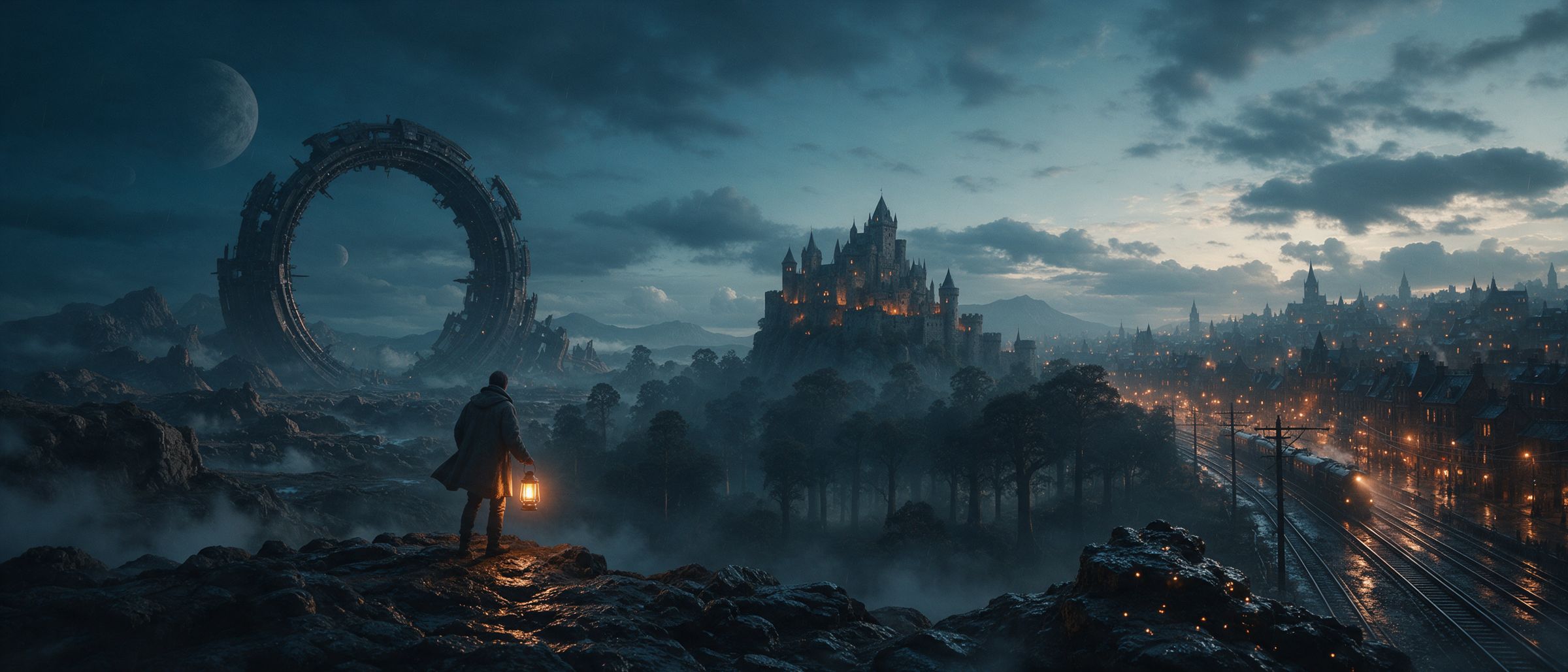
Maybe you are a reader. You have shouted at a main character more than once: don't open that door. Maybe you are a gamer who loves a good story but is tired of picking from the same three dialogue options. Either way, you have wanted the same thing: to step into the story and decide for yourself.
Books cannot do that, and most games only pretend to. An AI text adventure can.
From "I don't understand that" to anything you can imagine
In the early eighties you could sit in front of a screen that said You are standing in an open field west of a white house and type what you wanted to do. Those were text adventures: games made only of words. They were wonderful, and limited. Type something the game had not been written for and it told you it did not understand.
An AI text adventure keeps the idea and removes that wall. You still type what you do. But instead of a fixed list of answers, an AI storyteller writes the next scene, whatever you tried.
How a turn works
You read the scene. You type what your character does or says, in a sentence or two: I open the letter. I ask the captain why the ship changed course. I climb down the drainpipe. The storyteller writes what happens next. You do not need to be a writer; one short line is enough, and if you get stuck you can turn on suggestions and pick a direction.
What separates a good one from a chatbot
Anyone can connect a chatbot to a story prompt. It is fun for ten minutes, and then the story drifts, forgets what happened and lets you win everything. What turns it into a game is everything around the AI:
- A world that stays the same world. It should not forget the sword you bought or invent money you never had.
- Stakes. Some actions should be able to fail, and failure should cost something.
- Direction. A goal, a threat on its way, people who want things from you.
- A voice. Good prose and real dialogue, not a chat log.
That is what NovelFarer was built for. It is a novel you play yourself, with a role-playing game underneath. An AI storyteller writes; a rules engine keeps track of what it costs you: health, money and belongings, the time, the map, who trusts you and what is coming for you. Risky actions are rolled with a d20 you throw yourself. See how the dice work.

How to begin
There are seven genres: fantasy, science fiction, mystery, horror, cyberpunk, post-apocalypse and pirates. Getting started takes three steps:
- Pick a worldStart from one of the ready-made worlds, or describe your own in one sentence.
- Create your characterChoose one of five roles, each with its own strengths, and write your own past.
- Type what you doThe storyteller writes the scene. When it gets risky you throw the die, and the game keeps count of what it costs you.
You can play in English or Dutch, take back up to twenty turns, have a scene told differently and share a story as a readable page. With a paid plan the opening scene and your portrait are painted, and so are a number of new places each month.
What you miss if you only read
A book ends the way the author decided. A chatbot story ends when you get bored. An AI text adventure with real rules ends the way you played it: with the people you won over, the risks you took and the price you paid.
What it is like
The first time someone trusts you less because of what you did, or a bluff fails and you have to talk your way out of it, you will notice the difference. You are not reading a story. You are in one.