 NovelFarer
An AI mystery game where the solution is fixed before you start

You love the moment in a detective story when everything clicks. The detail you read past on page twelve. The alibi that was just slightly too neat. You do not just want to read that moment. You want to earn it.
So you try an AI detective story, and something feels off. Whoever you accuse turns out to be guilty. The clues never quite add up. You realise there was no solution at all: the AI was making it up as you went.
That is not a mystery. A mystery is only fair if the truth exists before you start looking for it.
Why most AI mysteries cannot be solved
A language model writes the next sentence that fits. It does not keep a secret. So when you ask it to run a case, it improvises suspects and clues, and it will happily agree with whatever theory you bring. It looks like detective work, but you cannot actually solve anything, and you cannot really fail either.
A case that is decided before you arrive
NovelFarer's mysteries are built the other way round. Before your first scene, the game decides the truth: who did it, how and why. From then on it never changes to suit you. Every case starts with one question, such as who made the passenger vanish from the night train?, and behind it the game sets up:
- three to five suspects, each with their own reasons to lie;
- six to nine clues, things you can find, notice or be told, spread over different people, places and kinds of evidence;
- clues that clear an innocent suspect, and one or two false leads that point the wrong way for a believable reason.
The case is meant to be fair: a careful player can reach the truth from the real clues alone. The culprit hides, deflects and lies about exactly what would give them away. Nobody confesses because you asked nicely.
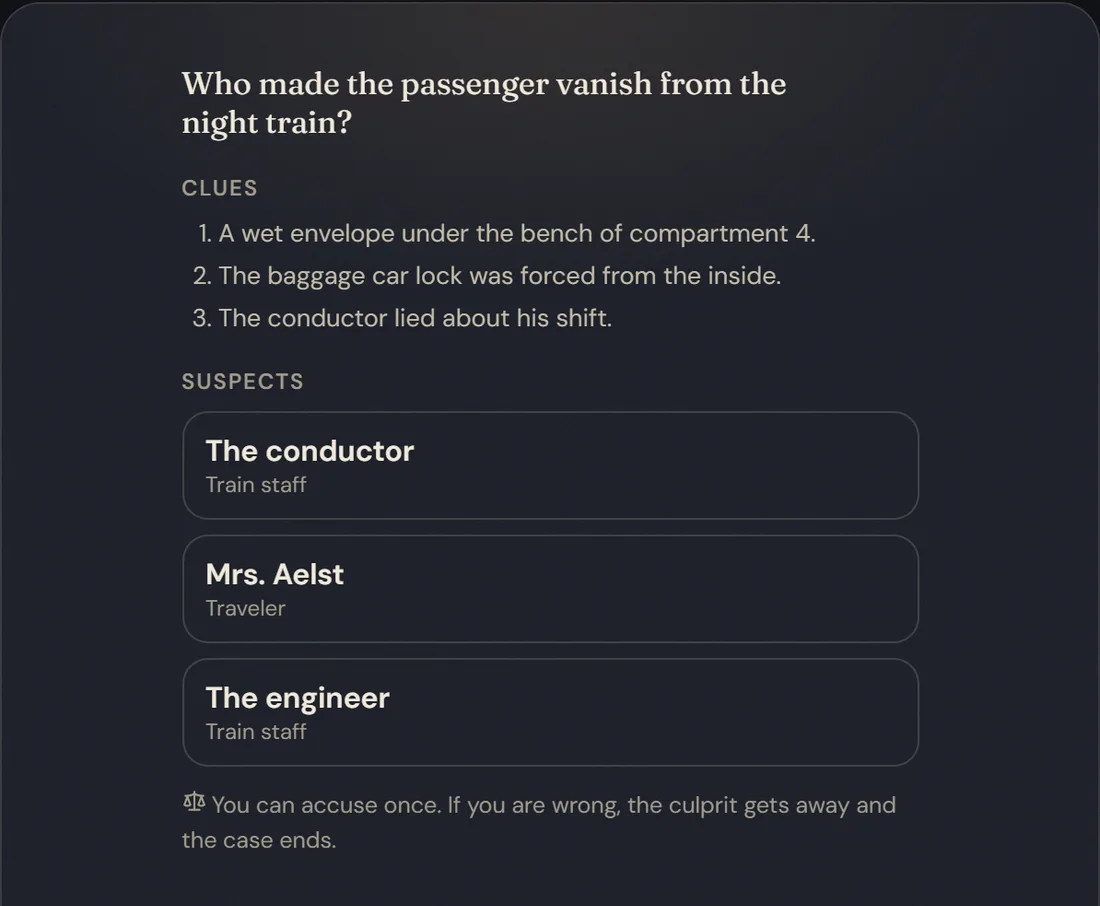
Clues only count when you have really found them in the story; then they go into your case file. You question people, and trust matters: someone who likes you tells you more. You search rooms, read papers, follow people. Risky moves, like picking the lock of a cabin or bluffing your way into the baggage car, are rolled with a d20. With the Hunch talent you can, once per rest, get a real clue without searching.
How to take your first case
- Pick a worldStart from one of the ready-made worlds, or describe your own in one sentence.
- Create your characterChoose one of five roles, each with its own strengths, and write your own past.
- Type what you doThe storyteller writes the scene. When it gets risky you throw the die, and the game keeps count of what it costs you.
Three cases are ready to start:
- The last night train. A rainy city in 1948, an anonymous letter and a passenger who disappeared. Everyone has a secret.
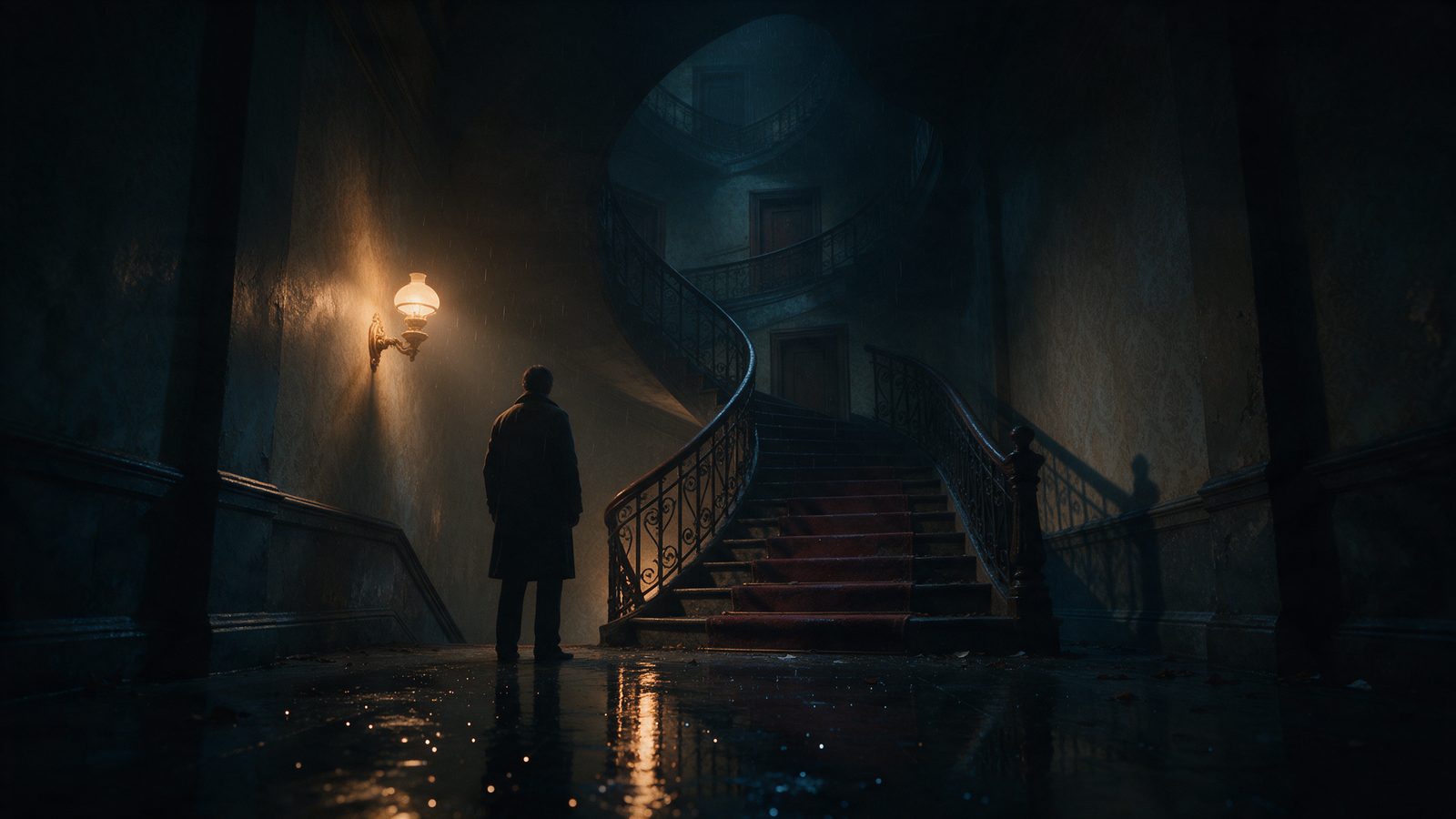
- The room without a number. An old hotel where the stairs do not match the number of floors, and the staff pretend you are imagining things.
- What the harbour swallows. As a harbour clerk you notice ships arriving with crews that are registered nowhere.
Or describe your own mystery in one sentence, and the game builds a case around it.
What is at stake: one accusation
You need at least three clues before you can accuse anyone, and you can accuse exactly once. If you are wrong, the culprit gets away and the case ends. An accusation is final; you cannot take it back. That is what makes the clues matter, and what makes your heart beat a little faster when you finally press the button.
What it feels like to get it right
You lay the envelope next to the forced lock and the conductor's lie, and suddenly you see it. You name the culprit. The case closes, and you know you solved it yourself, because the answer was there all along. Get it right with your first accusation and you earn the achievement Sharp verdict. Then keep playing in the same world, or take the next case.