 NovelFarer
Dice, danger and consequences: how NovelFarer turns an AI story into a game
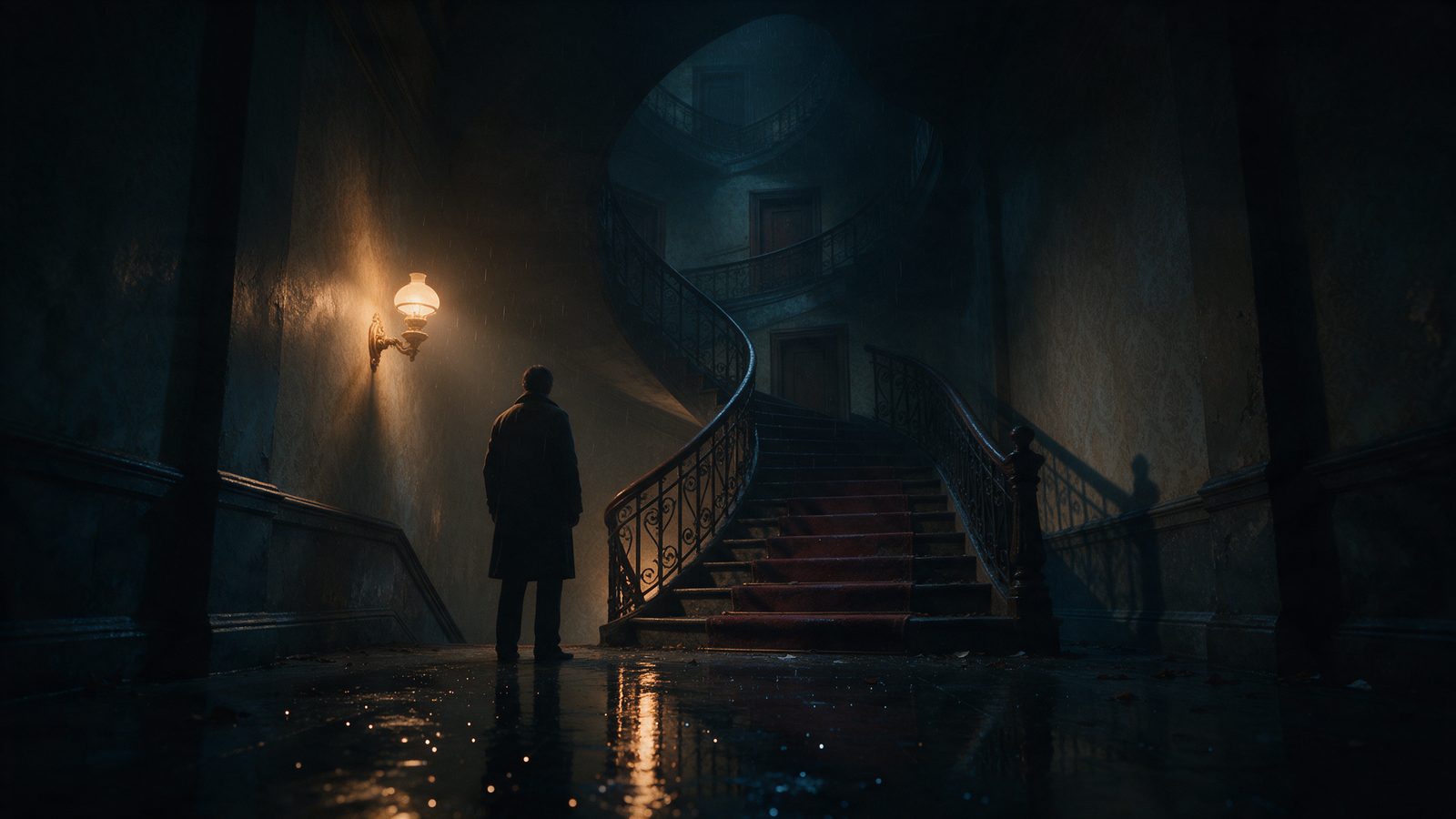
You wanted an adventure. So you asked an AI to tell you one, and at first it was wonderful. You climbed the drainpipe in the rain, and it worked. You bluffed past the guard, and it worked. You picked the lock, outran the patrol and talked the queen into giving you her ship. It all worked.
And somewhere around the third victory, you stopped caring.
It is not your imagination. A win means nothing if losing was never possible. Without risk there is no tension, and without tension there is no adventure.
Why AI stories lose their teeth
An AI storyteller is trained to be helpful. Ask for something and it tends to give it to you. That is great for writing an email and terrible for a game. The storyteller has no reason to say no, no way to keep score, and no memory it can be held to.
The storyteller tells, the game decides
In NovelFarer an AI storyteller still writes every scene in novel prose. But it does not decide what is true. A rules engine, plain code with no AI in it, keeps track of your health, money, belongings, the time, where you are and who trusts you. Pay the ferryman and the coins are gone. Get hurt and you stay hurt until you rest or get patched up.
Risky actions are rolled, and you throw the die
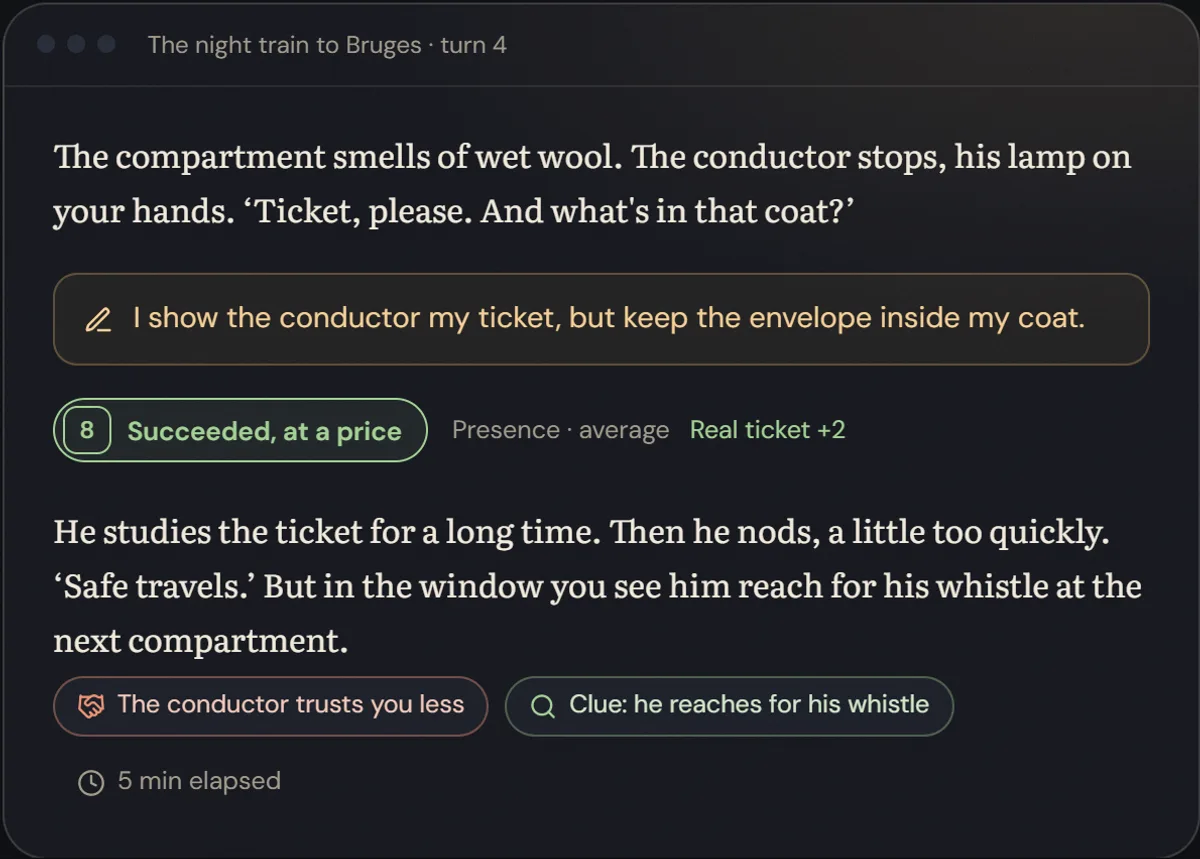
Walking into a tavern is just walking into a tavern. But bluff your way past a doorman, pick a lock while someone is coming or jump the gap between two roofs, and the game stops and shows you the roll before anything happens:
- the number you need: 9, 12 or 15, depending on how hard it is;
- what is at stake if it goes wrong;
- what helps you: one of your four attributes (strength, insight, presence, agility) plus anything in the scene that works in your favour, like a real ticket or a good disguise.
Then you throw a twenty-sided die yourself, with a swipe, a tap or a button. The server rolls fairly. There are four outcomes, and one of them is the best part of tabletop games: you succeed, but at a price. Would you rather not risk it? Choose something else, and nothing has been rolled.
Every place has its own danger
Many games make enemies grow with your level, so the world always feels the same. NovelFarer does the opposite. Every area on the map has a fixed danger level: calm, dangerous or deadly. The further you travel from where you started, the worse it tends to get, and a dungeon is always one step worse than the land around it. In a deadly place every risk goes up a step, up to a difficulty of 18 and 24 damage.

How to try it
- Pick a worldStart from one of the ready-made worlds, or describe your own in one sentence.
- Create your characterChoose one of five roles, each with its own strengths, and write your own past.
- Type what you doThe storyteller writes the scene. When it gets risky you throw the die, and the game keeps count of what it costs you.
What is at stake
This time, things can go wrong. When your health hits zero you collapse: you come round with some health back, half your money gone and whatever was hunting you closer than before. Danger clocks fill as time passes and when you fail, and when one runs out the consequence stays. Your character does not die, but you feel every mistake.
What winning feels like again
You stand at the foot of a staircase that should not exist. You need a 12. You have insight 3 and a stolen key. You throw. And whatever happens next, it matters, because it could have gone the other way. You grow by real progress, from level 1 to 10, and the world does not grow with you, so you can feel how far you have come.
That is the difference between a story that happens to you and an adventure you play.